Overview
Just like in any other country, you are required to comply with the laws, rules and regulations of Kenya. Travel requirements can change, so travelers should always confirm the latest entry information from official Kenyan immigration, health, airline, or consular sources before departure.
1. Entry Requirements: Kenya eTA
Kenya now uses an Electronic Travel Authorisation, commonly known as eTA, for most visitors. Travelers who are not exempt should apply online and receive approval before starting their journey to Kenya.
All visitors, including infants and children, are generally required to have an approved eTA before travel unless they fall under an official exemption category. Some exemptions apply, including Kenya permanent residents, holders of valid work permits or passes, certain re-entry pass holders, citizens of East African Partner States for stays not exceeding the allowed period, and other listed exempt categories.
Before starting the eTA application, travelers should prepare a valid passport with at least six months validity and at least one blank page, a passport-type photo or selfie, contact details, travel itinerary, accommodation booking confirmation, and a valid payment method.
Depending on the purpose of travel, additional documents may be required. Business travelers may need an invitation letter and company registration documents. Family visitors may need an invitation letter from the host and the host’s identification or residency documents. Conference, medical, diplomatic, employment, or other special travel purposes may also require supporting documents.
Processing is typically about three working days, although it may take longer in some cases. Travelers should avoid applying at the last minute.
2. Health Requirements
Travelers arriving in Kenya from countries where yellow fever is endemic should present a valid yellow fever vaccination certificate. Travelers who are transiting through yellow-fever-risk countries should also confirm whether a certificate is required based on their routing and transit duration.
Kenya no longer requires all arriving travelers to show proof of COVID-19 vaccination or a pre-departure COVID-19 test. However, travelers arriving with flu-like symptoms may be required to complete health screening requirements and take a COVID-19 test on arrival at their own cost.
Health guidance can change, especially during outbreaks, so travelers should confirm current requirements before departure.
3. The Climate
Kenya being on the middle of the Equator experiences mild and pleasant weather conditions. It enjoys sunshine all through the year.
The climate of Kenya essentially depends on three major factors: temperature, rainfall and humidity. These three factors are controlled by altitude and generally the higher you go the cooler it becomes. The lowest point in Kenya is sea level on the Indian Ocean while the highest point is 5,197m above sea level at Mount Kenya.
There are five different climatic zones in Kenya and they can be categorized as follows:
Monsoon: Hot and Wet
Mainly experienced at the coastal strip, that is, Mombasa, Malindi, Lamu and around the Lake Victoria region. Temperatures remain consistently hot for most of the year, but on the beach the humidity is tempered by the ocean breeze.
Hot and Dry: Arid, Semi-Arid, Desert and Semi-Desert
This describes the semi-arid areas of Northern Kenya. The regions are sparsely populated by pastoral people who keep camels, cattle and goats. There is plenty of wildlife which have adapted to the tough conditions.
Tropical Savanna
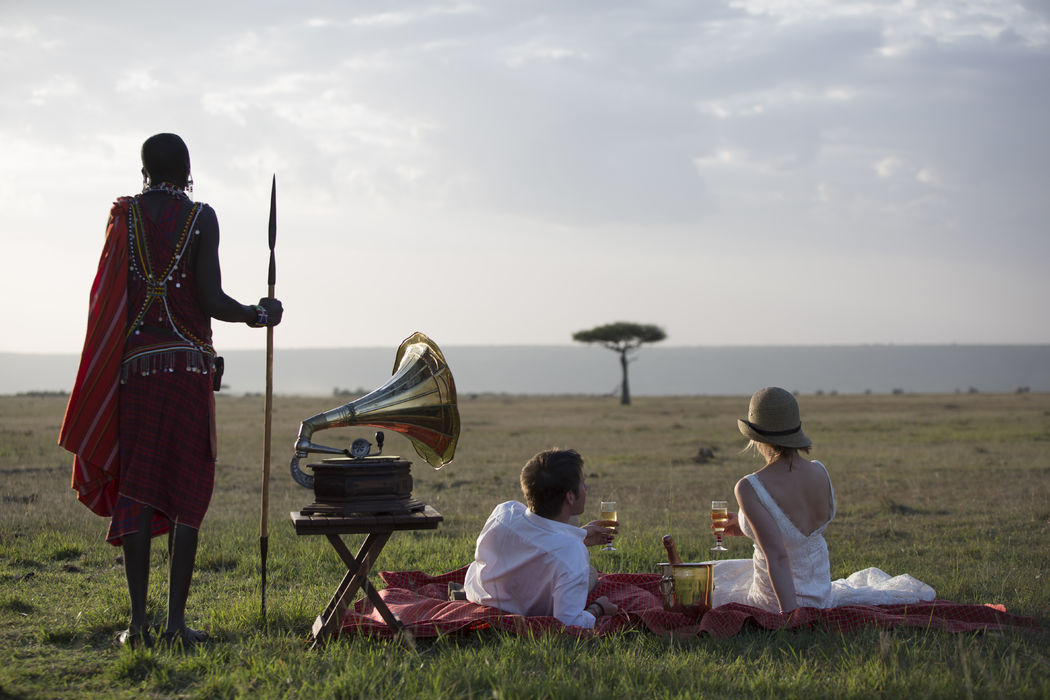
The Eastern and South Eastern regions of Kenya where Amboseli National Park, Meru National Park, Maasai Mara National Reserve, and Tsavo National Parks are located experience a tropical savanna climate for most of the year, but with seasonal rainfall. The vegetation comprises small thorny bushes and scattered huge baobab trees. The climate typically produces open grasslands, known as savannah, with small acacia and evergreen trees that support plenty of wildlife including grazers, browsers and carnivores.
Equatorial: Warm and Temperate
The climate is warm and temperate in Nairobi, Western Kenya, Central Highlands and Rift Valley Highlands regions. They receive a substantial amount of rainfall during the year. Nairobi is warm between December and March, while in June and July temperatures drop, leading to chilly evenings. These are the crop-growing parts of Kenya and are also heavily populated.
Cool and Wet Climate
The climate on the Aberdare Mountain Ranges, Mount Kenya, Mount Elgon, Cherangany Hills and the vast Mau Complex is cool and wet. These areas are densely forested with bamboo, open moorlands and montane forest. The mountains and hills host an outstandingly varied fauna including the Big Five alongside forest species. These areas also serve as critical water catchment areas in Kenya.
4. Best Time To Visit Kenya
Swimming, Leisure and Water Sports
The Kenyan coastal region is one of the top tourist destinations. This is because of the white sandy beaches, history, the culture of its people and the pleasant climate. There are various activities one may engage in such as:
- Scuba diving
- Kite surfing
- Sport fishing
- Jet skiing
- Kayaking
- Wind surfing
- Banana boat riding
- Fly boarding
- Snorkeling
- Glass bottom boats
- Sunbathing
- Beach walks and beach sports
Light clothing is necessary because of the hot and humid climate.
Humpback Whales Migration
Get a chance to see the humpback whales migrating along the coast in Watamu. It is believed that they travel to warm tropical inner reefs to breed and give birth to their calves. Watching them in their natural environment, sometimes leaping out of the water in pairs or larger family groups, is an unforgettable sight.
The Great Wildebeest Migration
The Great Wildebeest Migration is one of the most remarkable wildlife events in the world. This migration happens between Serengeti National Park in Tanzania and Maasai Mara National Reserve in Kenya, which are part of the same ecosystem, during the months of July through September in search of greener pastures. Millions of wildebeest cross the Mara River from the Serengeti while trying to evade the Mara crocodiles. The Mara River crossing is an event that will take you through a range of emotions: anticipation, sorrow, excitement and so much more.
Safaris
The perfect wildlife adventure in Kenya occurs during the hot and dry seasons. This climate is perfect for bush safaris with moderate equatorial temperatures that are comfortable during game drives. There are various national parks and reserves such as Nairobi National Park, Maasai Mara National Reserve, Samburu National Reserve, Amboseli National Park, Tsavo National Parks, Meru National Park, Aberdare National Park and Lake Nakuru National Park. These parks and reserves provide a variety of wild animals and different bird species.
Culture
Kenya is richly endowed with diverse ethnic groups and cultures. Culture is expressed through historic buildings, monuments, sites of important past events, traditional landscapes, literature, language, music, art, traditional foods, lifestyle, archaeological sites, museums and traditional sports such as bull fighting in Western Kenya.
5. Appropriate Clothing
Even though most Kenyans are religious, the country has no strict national conservative dressing requirement for visitors. However, modest dressing is advisable in religious sites, rural communities and formal settings.
Carry light comfortable clothing since most areas of Kenya have a pleasant warm climate and sunshine. A sweater or warm jacket, warm socks and rain-friendly clothing are recommended for chilly mornings, evenings, highland areas, mountain regions and rainy periods. Also carry comfortable sandals, flip flops and shoes for the beach and safari respectively.
If you are going on a safari, choose appropriate clothing for the area, climate and wildlife experience. Neutral colors are generally better for bush safaris. Avoid very bright colors which can attract insects or make you stand out unnecessarily in the wild.
Sunscreen, sunglasses and hats are advisable because of the ever-present risk of sunburn. While in Kenya, you may also buy a Maasai Shuka or a Kikoi, which are similar to sarongs. They can be handy for covering yourself from dust on safari, using as a pillow on long journeys or wearing at the beach.
6. Do’s and Don’ts: Security Tips
In as much as you may want to take pictures of this beautiful country, do not take pictures of government buildings, military installations, protected premises or security-sensitive areas. Always enquire from your guide, driver or a security officer if photography is allowed.
Before taking pictures of people, ask for their permission and confirm whether they charge for photographs. Watch your money, count your change and make sure that when exchanging currency, you do so in a reputable hotel, foreign exchange bureau or bank.
Do not display valuables or expensive jewelry publicly. Only carry what you need when venturing out. Carry a discreet money bag for documentation and cash.
ATMs are common across Kenya, and Visa and Mastercard debit and credit cards are accepted widely by banks and many point-of-sale machines. However, always check before attempting to withdraw money or pay for a service or product.
It is advisable to carry one or two bank cards with sufficient funds and some cash for emergencies. You can exchange foreign currency to local currency at banks and licensed foreign exchange bureaus in major towns and cities.
Make copies of all essential documents including passport, eTA approval, travel insurance and travel papers. Scan or take clear photos of them and keep a secure digital copy in your email or cloud storage in case you lose the originals.
7. Communication and Mobile Money
Communication
It is easy to get a mobile phone SIM card in Kenya. Kenya mobile networks and carriers use GSM bands. For mobile telephone services, the main mobile network providers include Safaricom, Airtel and Telkom. They provide mobile network coverage and data packages.
You generally need your passport to register a SIM card. Once registered, you can purchase airtime and data bundles and communicate locally or internationally. Safaricom has the widest coverage and is the biggest provider among the major networks.
Make sure everything is operating correctly before you leave the customer service centre. Ask the customer service agents what bundles or packages are available and how to access them from your SIM card.
Mobile Money
Kenya is a pioneer and leader in mobile money. Each of the major mobile network providers has mobile money services, but Safaricom’s M-Pesa mobile payment service is the most widely used and has the biggest network of agents and merchant payment points.
Once you have purchased and registered a Safaricom SIM card, ask the customer service agents to activate M-Pesa, show you how to top up your mobile wallet, purchase airtime or data, and pay for goods and services.
Back to Blogs